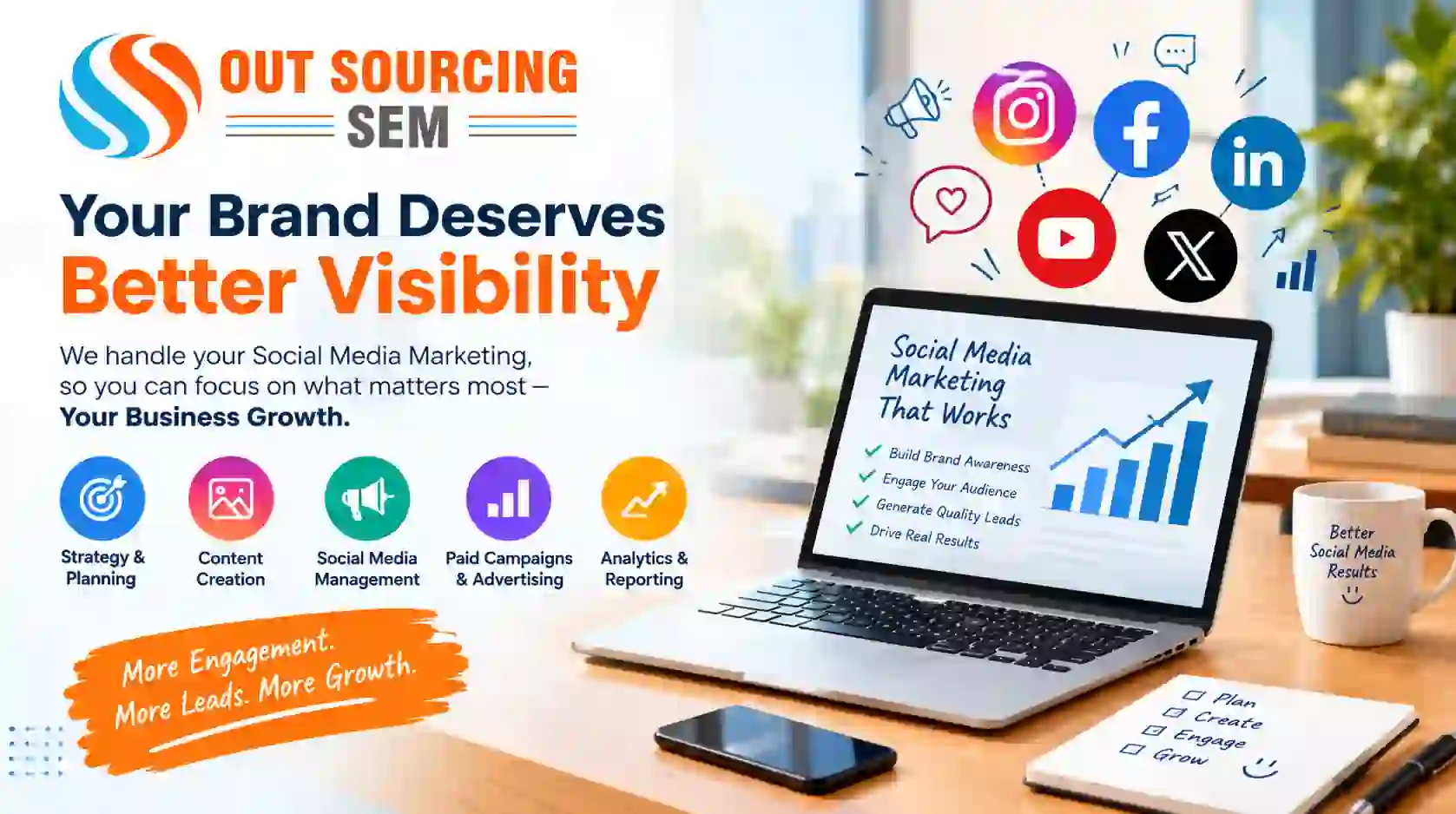
Why Businesses Should Outsource Social Media Marketing Services in 2026
Discover the benefits of outsourcing social media marketing services in 2026, including expert strategy, content creation, social media management, paid campaigns, and performance tracking.
Why Businesses Should Outsource Social Media Marketing Services in 2026
Social media has become an important part of modern digital marketing. Businesses use platforms such as Facebook, Instagram, LinkedIn, YouTube, and other social channels to build brand awareness, engage audiences, generate leads, and support business growth.
However, managing social media effectively requires much more than simply publishing posts. Businesses need content planning, creative development, audience research, community management, analytics, paid campaigns, and consistent optimization.
Professional Social Media Marketing Services can help businesses manage these activities through a structured and measurable social media strategy. Outsourcing social media marketing can also provide access to experienced professionals without requiring a business to build and manage a large in-house marketing team.
This guide explains the benefits of outsourcing social media marketing, how professional Social Media Management works, what an experienced Social Media Agency can provide, and why outsourcing can be a practical solution for businesses looking to improve their online presence.
Social Media Marketing Outsourcing: Quick Answer
Outsourcing social media marketing means hiring an external marketing team or agency to plan, create, manage, publish, monitor, and optimize social media activities for a business.
Professional Social Media Marketing Services can include content strategy, social media management, graphic and video content, community engagement, paid advertising, analytics, reporting, and performance optimization.
Outsourcing can be particularly useful for businesses that do not have the time, expertise, creative resources, or internal team required to maintain an effective social media presence.
What Does It Mean to Outsource Social Media Marketing?
Outsourcing social media marketing means working with an external professional team to manage some or all of a company's social media activities.
Instead of hiring separate employees for content writing, graphic design, video creation, social media management, advertising, and analytics, a business can work with one specialized team that coordinates these activities.
Common Outsourced Social Media Activities Include:
- Social media strategy
- Social Media Management
- Social media content planning
- Post creation and publishing
- Graphic design
- Short-form video content
- Caption writing
- Hashtag research
- Community management
- Social media advertising
- Audience research
- Performance reporting
- Social media optimization
Why Social Media Marketing Matters for Businesses
Social media gives businesses an opportunity to communicate directly with existing and potential customers. It can help companies introduce their products and services, share useful information, demonstrate expertise, and develop stronger relationships with their audiences.
Social platforms can also support other digital marketing activities. Content published on social media can increase awareness of website pages, campaigns, products, services, events, and other business resources.
Social Media Marketing Can Help Businesses With:
- Brand awareness
- Audience engagement
- Lead generation
- Customer communication
- Website traffic
- Product and service promotion
- Community building
- Customer retention
- Market research
- Online reputation development
However, achieving these objectives requires a consistent strategy rather than occasional social media posting.
Benefits of Outsourcing Social Media Marketing for Business Growth
One of the main reasons businesses choose outsourcing is the ability to access specialized skills without building a complete social media team internally.
The benefits of outsourcing social media marketing for business growth can vary depending on the business, industry, audience, goals, and quality of execution. However, several advantages are common across many businesses.
1. Access to Specialized Expertise
A professional social media team can bring experience in content strategy, platform management, audience targeting, creative development, advertising, and analytics.
2. Reduced Internal Workload
Social media requires continuous planning and execution. Outsourcing can reduce the workload placed on business owners and internal employees.
3. Consistent Content Production
A dedicated team can maintain a structured publishing schedule and ensure that social profiles remain active and updated.
4. Better Content Quality
Professional writers, designers, video editors, and social media specialists can work together to create more engaging and relevant content.
5. Scalable Marketing Support
Businesses can increase their social media activity during product launches, seasonal campaigns, promotional periods, or business expansion without necessarily hiring additional full-time employees.
6. Better Performance Tracking
Professional teams can monitor important metrics and use performance data to improve future campaigns and content.
Access to Social Media Marketing Expertise
Social media platforms continuously change their features, advertising options, content formats, algorithms, and audience behavior. Keeping up with these changes can be difficult for businesses focused primarily on their products and services.
Working with an experienced Social Media Agency can give businesses access to professionals who understand platform-specific strategies and social media workflows.
Professional Expertise May Cover:
- Audience research
- Content strategy
- Platform selection
- Creative planning
- Caption development
- Social media advertising
- Community engagement
- Competitor analysis
- Performance analysis
- Campaign optimization
Professional Social Media Content Creation
Content is at the center of most successful social media strategies. Businesses need content that is relevant to their target audience while also communicating their brand message clearly.
Professional social media teams can develop different types of content depending on the platform, audience, and marketing objective.
Examples of Social Media Content Include:
- Educational posts
- Product and service promotions
- Customer testimonials
- Infographics
- Short-form videos
- Reels
- Stories
- Industry updates
- Behind-the-scenes content
- Frequently asked questions
- Polls and interactive content
- Event and seasonal campaigns
The objective should not be to publish as much content as possible. Businesses should focus on creating useful, relevant, recognizable, and audience-focused content.
Maintaining Consistent Social Media Activity
One of the biggest challenges businesses face is maintaining consistency. Social media accounts may become inactive when business owners or employees become busy with daily operations.
Professional Social Media Management provides a structured process for planning, creating, scheduling, publishing, and monitoring content.
A Consistent Social Media Workflow Can Include:
- Monthly content planning
- Topic research
- Content calendar creation
- Creative development
- Caption writing
- Content approval
- Post scheduling
- Community monitoring
- Performance analysis
- Monthly optimization
Building a Strategic Social Media Plan
Effective social media marketing should begin with clear business objectives. Posting content without understanding the target audience, business goals, and desired outcomes can make social media activity difficult to measure.
A Social Media Strategy Should Define:
- Target audience
- Business objectives
- Primary social platforms
- Brand voice
- Content themes
- Publishing frequency
- Campaign objectives
- Advertising budget
- Engagement strategy
- Key performance indicators
A professional social media strategy helps ensure that content and campaigns are connected to broader business objectives.
Managing Multiple Social Media Platforms
Businesses may use several social platforms, but each platform has its own audience behavior, content formats, and communication style.
Content that performs well on Instagram may need to be adapted for LinkedIn, Facebook, YouTube, or another platform. A professional team can develop platform-specific content while maintaining consistent brand messaging.
Social Platforms Businesses May Consider:
- YouTube
- X
- Other relevant industry-specific platforms
Businesses do not necessarily need to be active on every platform. Platform selection should depend on audience behavior, business goals, resources, and content capabilities.
Social Media Engagement and Community Management
Social media is not only a publishing channel. It is also a communication environment where customers can ask questions, share opinions, provide feedback, and interact with a brand.
Community management can include monitoring comments and messages, responding to appropriate customer questions, identifying recurring concerns, and maintaining a professional brand presence.
Community Management Can Support:
- Customer communication
- Audience relationships
- Brand reputation
- Customer feedback collection
- Lead identification
- Audience loyalty
Social Media Advertising and Paid Campaigns
Organic social media content can be combined with paid advertising to reach specific audiences and promote important business objectives.
Social media advertising may be used for brand awareness, website traffic, lead generation, product promotion, event registrations, app promotion, and other marketing goals.
Paid Social Media Campaigns May Include:
- Audience targeting
- Campaign setup
- Creative testing
- Ad copy development
- Retargeting campaigns
- Lead generation campaigns
- Conversion-focused campaigns
- Budget management
- Performance monitoring
- Campaign optimization
Paid campaigns should be evaluated using relevant business metrics rather than focusing only on impressions or follower growth.
Social Media Analytics and Performance Tracking
A social media strategy should be measurable. Analytics can help businesses understand which content attracts attention, which campaigns generate engagement, and which activities contribute to business objectives.
Important Social Media Metrics Can Include:
- Reach
- Impressions
- Engagement
- Engagement rate
- Video views
- Follower growth
- Website clicks
- Leads
- Conversions
- Advertising cost
- Return on advertising spend where measurable
Regular reporting allows businesses and marketing teams to identify successful content patterns and make informed improvements.
Is Outsourcing Social Media Marketing Cost-Effective?
The cost-effectiveness of outsourcing depends on the business's goals, content requirements, number of platforms, advertising activity, and selected service provider.
Building an internal social media team may require separate resources for strategy, content writing, graphic design, video production, advertising, management, and analytics.
An external agency can provide access to multiple skill sets through one coordinated service. This can make outsourcing an attractive option for businesses that require ongoing social media support without creating a large internal department.
Factors That Can Influence Outsourcing Costs:
- Number of social media platforms
- Posting frequency
- Content volume
- Graphic design requirements
- Video production requirements
- Community management
- Paid advertising
- Campaign complexity
- Reporting requirements
- Level of strategic support
How to Choose the Right Social Media Agency
Choosing a social media partner should involve more than comparing monthly prices. Businesses should evaluate experience, strategy, creative quality, communication, reporting, and the ability to understand their industry.
1. Review Previous Work
Examine the agency's previous campaigns, content quality, creative work, and experience with businesses similar to yours.
2. Understand the Strategy
Ask how the agency develops content strategies, selects platforms, identifies audiences, and measures campaign performance.
3. Check Content Capabilities
A reliable social media partner should have access to content writers, designers, strategists, and other specialists required for the campaign.
4. Ask About Reporting
Regular reporting should explain what was published, how audiences responded, which campaigns performed well, and what improvements are planned.
5. Evaluate Communication
Clear communication and an efficient approval process are important when an external team manages content representing your brand.
6. Consider Scalability
Choose a provider that can support increased content production, additional platforms, campaigns, or advertising requirements as your business grows.
OutsourcingSEM Social Media Marketing Services
OutsourcingSEM Social Media Marketing services are designed to help businesses and organizations build a consistent and strategic presence across relevant social media platforms.
The approach can combine social media strategy, content planning, creative development, publishing, audience engagement, paid campaigns, and performance analysis according to the business's requirements.
Social Media Support Can Include:
- Social media strategy
- Social Media Management
- Content calendar planning
- Social media post creation
- Graphic content
- Short-form video content
- Caption writing
- Community management
- Social media advertising
- Performance reporting
- Content optimization
Businesses looking for an affordable social media marketing agency should evaluate the overall value of the service rather than comparing prices alone. Strategy, content quality, consistency, reporting, and campaign management can all influence the effectiveness of an outsourced social media program.
OutsourcingSEM can also support businesses that require broader digital marketing services, allowing social media activities to work alongside other online marketing initiatives.
Social Media Marketing Outsourcing Checklist
- Define clear social media objectives.
- Identify the target audience.
- Select relevant social media platforms.
- Develop a social media strategy.
- Create a monthly content calendar.
- Define the brand voice.
- Plan educational and promotional content.
- Create high-quality visual content.
- Schedule and publish content consistently.
- Monitor comments and messages.
- Plan paid social media campaigns where appropriate.
- Track social media performance.
- Review monthly reports.
- Identify underperforming content.
- Optimize future campaigns based on data.
- Scale successful activities as the business grows.
Frequently Asked Questions About Outsourcing Social Media Marketing
What does it mean to outsource social media marketing?
Outsourcing social media marketing means hiring an external professional team or agency to manage activities such as social media strategy, content creation, publishing, engagement, advertising, and performance reporting.
What are the benefits of outsourcing social media marketing?
Benefits can include access to specialized expertise, consistent content production, reduced internal workload, professional creative support, scalable marketing resources, and structured performance tracking.
Is outsourcing social media marketing suitable for small businesses?
Yes. Small businesses may outsource social media marketing when they do not have enough internal time, staff, or expertise to maintain a consistent and strategic social media presence.
What services are included in Social Media Management?
Social Media Management may include content planning, post creation, scheduling, publishing, community engagement, social media monitoring, reporting, and optimization.
How much does outsourced social media marketing cost?
Costs vary depending on the number of platforms, content volume, creative requirements, advertising activity, community management, and strategic support required by the business.
Can a Social Media Agency manage paid advertising?
Many Social Media Agencies provide paid advertising services, including campaign setup, audience targeting, creative testing, budget management, performance monitoring, and optimization.
How can businesses measure social media marketing performance?
Businesses can measure performance using metrics such as reach, impressions, engagement, website clicks, leads, conversions, follower growth, advertising costs, and other business-specific indicators.
Should businesses outsource all of their social media marketing?
Not necessarily. Businesses can outsource selected activities or their complete social media operation depending on their internal capabilities, budget, goals, and preferred level of control.
Conclusion
Outsourcing social media marketing can help businesses access specialized expertise, maintain consistent content production, reduce internal workloads, and build a more structured approach to social media growth.
The most effective approach is not simply to publish more posts. Businesses should focus on understanding their audience, selecting the right platforms, creating useful content, maintaining consistent communication, managing campaigns effectively, and measuring meaningful performance.
Professional Social Media Marketing Services can provide the strategy, creative resources, management, and analytical support required to maintain a strong social media presence.
For businesses looking to outsource social media marketing, working with an experienced partner such as OutsourcingSEM Social Media Marketing can provide a structured approach to content, social media management, campaigns, and performance optimization.